Virtual Reality vs Augmented Reality in Education: What Parents Need to Know
Mar 08, 20263 min read
As educational technology rapidly advances, parents face an increasing array of options for enhancing their children's learning experiences. Two technologies that frequently generate both excitement and confusion are Virtual Reality (VR) and Augmented Reality (AR). While often mentioned in the same breath, these technologies are fundamentally different in their approach, and understanding these differences is crucial for making informed decisions about your child's education.
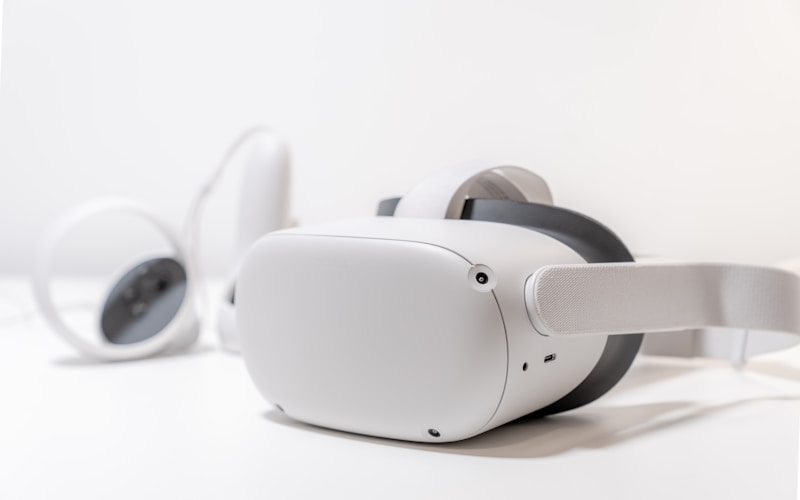
Virtual Reality creates a completely immersive digital environment that replaces the user's real-world surroundings. When wearing a VR headset, the user is transported to an entirely simulated world. They might find themselves walking on the surface of Mars, swimming through a coral reef, or exploring the inside of a human cell. The experience is fully immersive, engaging, and often spectacular. Educational VR applications can take students on field trips to ancient Rome or inside a beating heart.
Augmented Reality, by contrast, overlays digital content onto the real world. Rather than replacing reality, AR enhances it. A child using an AR-enabled book like EUREKA's Planets and Paws holds their physical textbook while digital 3D models, animations, and information appear on their tablet or phone screen, seemingly emerging from the book's pages. The child remains grounded in their physical environment while the learning content comes alive around them.
For young children, this distinction matters enormously. Pediatric eye specialists and child development experts have raised concerns about extended VR use in children under 12. The American Academy of Pediatrics notes that VR headsets can affect developing visual systems, particularly depth perception and eye coordination. The immersive nature of VR can also cause motion sickness, disorientation, and difficulty distinguishing virtual experiences from real ones in very young children.
AR presents a fundamentally safer alternative for young learners. Because children view AR content through a tablet or phone screen while remaining aware of their physical surroundings, the technology does not pose the same risks to visual development. Children maintain spatial awareness, can interact with peers and parents during the experience, and naturally limit their screen time since AR activities are typically session-based rather than continuously immersive.
The collaborative potential of AR is another significant advantage for educational settings. While VR is inherently isolating since each user is in their own virtual world, AR is inherently social. Multiple children can gather around an AR experience, point at and discuss what they see, and collaborate on solving problems. Teachers can guide AR experiences in real time, asking questions, directing attention, and facilitating discussion without removing children from their shared classroom environment.
From a practical standpoint, AR is also more accessible and affordable. VR requires dedicated headsets that range from hundreds to thousands of dollars per unit and need regular maintenance and sanitization. AR works on devices most families already own: smartphones and tablets. EUREKA's AR books, for example, work with any standard smartphone camera, making the technology accessible to a wide range of families regardless of their technology budget.
Content creation and curriculum alignment are areas where AR also excels. Because AR enhances existing physical materials like textbooks, worksheets, and posters, it integrates naturally into established curricula. Teachers do not need to redesign their entire approach. They simply add AR layers to materials they already use and trust. This incremental adoption model makes AR far easier to implement in both schools and homes compared to VR, which often requires a complete reimagining of how content is delivered.
The ideal educational technology strategy for young children combines the strengths of both approaches while respecting developmental needs. For children under 10, AR offers the best balance of engagement, safety, social learning, and practical accessibility. As children mature and their visual and cognitive systems develop, carefully supervised VR experiences can complement AR learning with fully immersive exploration. The key is matching the technology to the child's developmental stage and learning objectives.